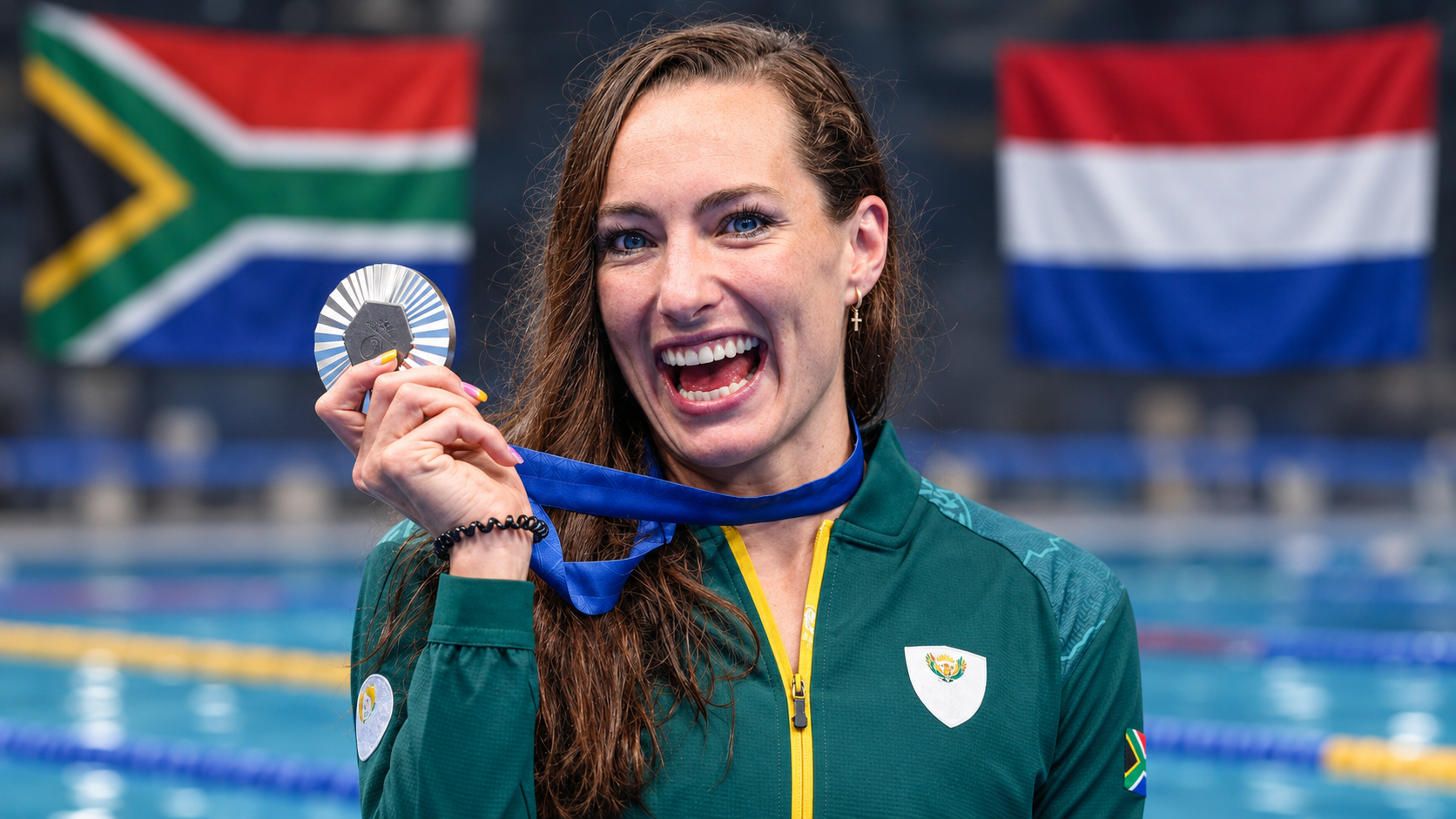
Tatjana Smith's decision to swim for the Netherlands is not really a story about patriotism. It is a story about a commercial model that never existed. When a double Olympic champion says she funded much of her own career, the failure belongs to the system around her, and federations and sponsors across Africa should read it as a warning about their own Olympic programmes.
What happened
On 10 November, Smith announced in a video on social media that she will represent the Netherlands, where she also holds citizenship, in the next phase of her career, with the 2028 Los Angeles Games as her target. Daily Maverick reports that World Aquatics has confirmed the change of sporting nationality. Smith, 29, won the 200m breaststroke at Tokyo 2020 and the 100m breaststroke at Paris 2024, as well as two silver medals, making her South Africa's most decorated Olympian. She cited the financial and practical challenges of a swimming career and the prospect of stronger high-performance support, and says she will keep training in South Africa.
The reaction has quickly turned to Swimming South Africa. Daily Maverick notes that the federation had withheld prize money from her, and The National reports that she puts the personal cost of her career at around R10 million. On 11 November, Sport, Arts and Culture Minister Gayton McKenzie said her choice should not become a political weapon while acknowledging the federation's governance problems; the FF Plus has called for urgent intervention.
What it means
Talent is now mobile in a way African sport has not priced in. Dual nationality, diaspora heritage and better-funded systems abroad mean an athlete's allegiance is partly a function of support. A federation that cannot fund or pay its stars risks losing them, and the sponsor value they carry leaves with them.
Sponsors carry governance risk they rarely contract for. A brand backing a national federation is exposed when that federation's relationship with its biggest name breaks down in public. The commercial asset was the athlete, not the federation logo.
Olympic sport still runs on grants and goodwill. Without meaningful broadcast income, athlete funding is decided by administrators and too often paid late. That is a structural gap rather than a one-off dispute, and it will surface again in other sports before LA 2028.
What we'd do
- Federations: ring-fence athlete prize money and performance bonuses in a separate account with a published payment schedule. Paying athletes on time is the cheapest retention policy available.
- Sponsors: contract with priority athletes directly as well as with the federation, and write governance terms into federation deals: audited accounts, athlete-payment timelines and step-down rights if they are missed.
- Olympic committees and ministries: build a pooled LA 2028 athlete fund with corporate partners, administered independently, so support follows performance rather than politics.
- Athletes and their agents: treat profile as an asset. Packaged content, appearances and personal partnerships create income that does not depend on a federation's cash flow.
Smith's departure will cost South Africa medals. The larger cost is the signal it sends to every brand weighing an Olympic-sport deal on the continent: a property is only as bankable as the system that keeps its stars.
Sources: Daily Maverick, 10 November 2026; AFP via Yahoo Sports, 10 November 2026; Al Jazeera, 11 November 2026; The National, 11 November 2026; Cape Times, 11 November 2026.