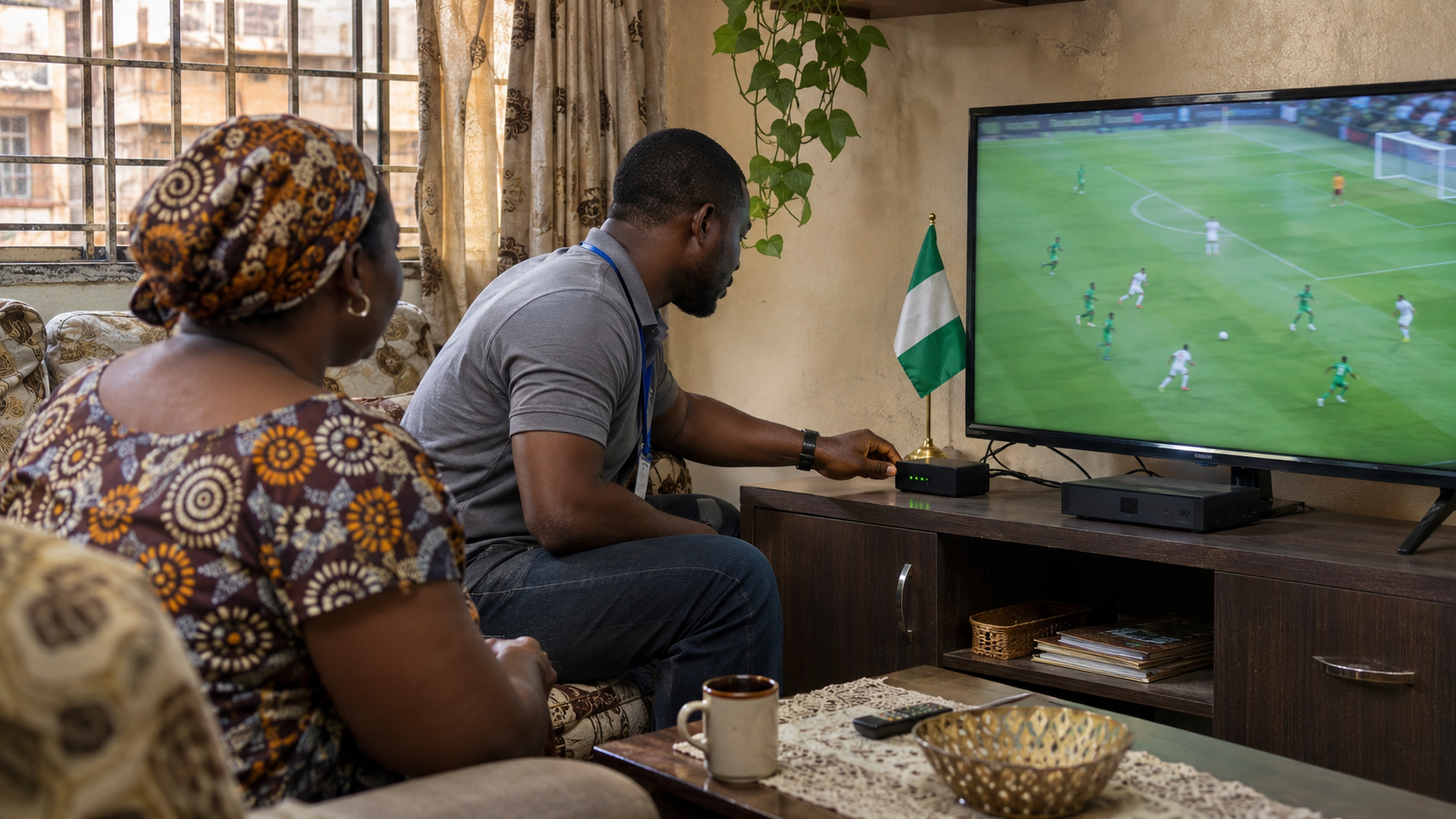
Nigeria's move to metered television ratings is being discussed as an advertising story. We think it is just as much a sports rights story. Once buyers can compare audiences on a common measure, properties that cannot evidence their own reach will be priced on someone else's numbers, so African rights holders should start building that evidence now.
What happened
At the National Advertising Conference in Abuja last week, National Broadcasting Commission director-general Charles Ebuebu said digitisation should be judged by whether broadcasters can show their audience, verify advertising delivery and attract investment. Digital transmission alone will not achieve that, he argued: the market needs "credible, comparable and independently governed measurement". His remarks were not a formal policy announcement.
The infrastructure is already moving. Nigeria's Audience Measurement System began in Lagos on 1 September, replacing diaries with peoplemeters in selected homes. Abuja, Port Harcourt and Kano come next, and the panel is ultimately meant to reach 60,000 households nationwide. Early data from the DeepMove Meter television measurement system were presented at the conference, although the coverage we reviewed published no figures.
What it means
Football is the obvious test. In a 2026 GeoPoll survey, 64% of Nigerian respondents named free-to-air television as their preferred way to watch live football. CAF's free-to-air agents for AFCON 2027, Media Experts Limited and Media Business Solutions, are due to name national broadcast partners in the coming months. A large sports audience therefore sits on the platform about to be metered.
This exposes the gap between headline numbers and tradable ones. CAF cites 3.6 billion viewers worldwide for AFCON 2025 and is targeting coverage of more than 500 million households for 2027, a projection rather than an audience. Those figures support a global sponsorship story. A media buyer in Lagos needs something narrower: who watched, in which market, for how long, and whether the brand was seen.
Domestic properties face the same test. The Nigeria Premier Football League has a title sponsorship worth $2.5m a year and streams selected matches on YouTube, so its audience is spread across platforms that no single meter will capture. At the Abuja conference, Yinka Adebayo of mediaReach OMD said broadcasters already hold some useful numbers but lack the structure to package and sell them. Many sports properties have the same problem.
The new currency may also undercount sport at first. Meters sit in homes, and we have seen no published detail on how viewing centres, bars and other shared viewing will be treated. Pirated retransmission, which the regulator addressed in a directive on 2 November, is another blind spot. Rights holders without their own evidence will struggle to challenge the result.
What we'd do
- Rights holders: write audience data into every broadcast and production contract, including ratings, as-run logs and platform analytics, with the right to use them in sponsorship sales.
- Leagues and federations: engage the NBC, ARCON and system operator FMEIL now. Ask what coverage will be live by AFCON in June 2027, how out-of-home viewing will be handled and what sports reporting can be bought.
- Broadcasters: produce one post-match audience report, showing television, YouTube and social separately so that nothing is double counted.
- Sponsors: ask for delivery by market rather than cumulative global reach, and build a review point tied to verified data into renewals.
Sources: Broadcast Media Africa, 16 November 2026; Brand Communicator, 13 November 2026; Marketing Edge, 15 November 2026; Techeconomy, 1 September 2026; Marketing Edge, September 2026; AfricaSoccer, 3 November 2026; News Agency of Nigeria, 26 August 2026; TheCable, August 2026; Broadcast Media Africa, 13 November 2026.