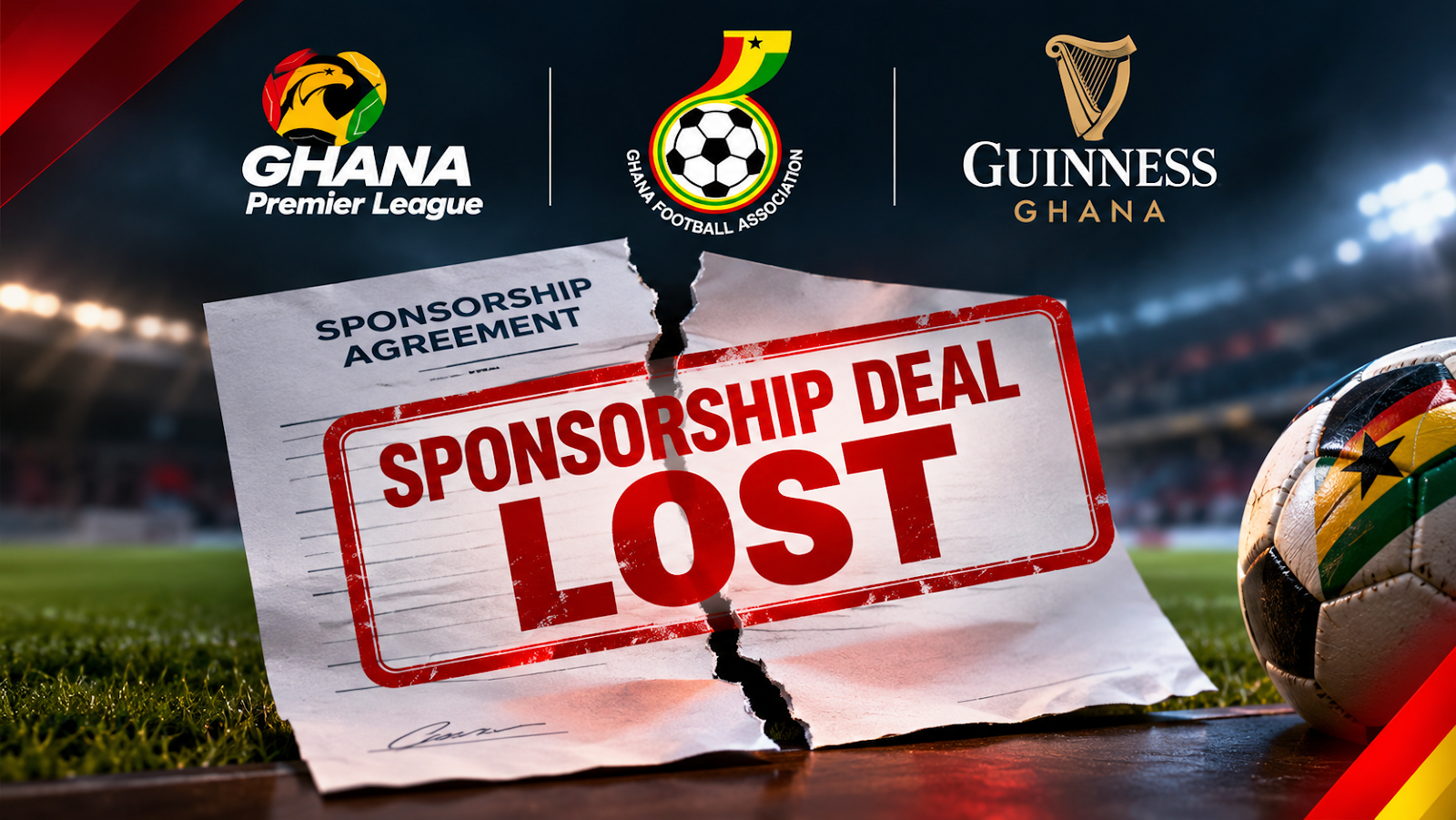
Ghana's football association says it lost a Guinness sponsorship worth more than $5m a year because the Food and Drugs Authority would not approve it. The lesson for African rights holders is not that regulators are the enemy. In alcohol, betting and other regulated categories, regulatory approval is part of the deal, and it has to be worked on from the first meeting, not after the heads of terms are agreed.
What happened
On Wednesday 4 November, GFA President Kurt Okraku told Parliament's Select Committee on Youth and Sports that Guinness Ghana Limited had approached the GFA "wanting to invest heavily in the Ghana Premier League". After a series of meetings, he said, "FDA said no." He put the value at "if I'm not mistaken, over $5 million a year" and asked the committee to lead a push to remove the FDA's approval power over alcohol sponsorship of sport.
Under the FDA's advertising guidelines, any promotion linking an alcoholic drink to sport must be submitted for approval. Alcohol advertising on radio and television is limited to 8pm–6am, and well-known personalities, including sports figures, may not endorse alcoholic drinks. The FDA defends the rules on public-health grounds, chiefly the exposure of minors. Okraku also raised the 17.5% VAT on match tickets and duties on imported team kit.
What it means
- The figure is a claim, not a contract. Okraku hedged it himself and no term was disclosed. Even so, for a league whose clubs have struggled to attract major sponsors, a deal of that scale would have been transformative, and its loss is a real cost.
- Regulatory risk is now commercial risk. Alcohol and betting are among the most active sponsor categories in African sport, and both are regulated market by market. A package that clears in one country may not clear in the next. AFCON 2027, spread across Kenya, Uganda and Tanzania, means three sets of rules for any regulated-category partner.
- Repeal is the slow road. Changing the rule through Parliament will take time and invite a public-health fight the game may not win. Because the approval requirement sits in the FDA's own guidelines, the quicker route is a deal structure the regulator can say yes to.
- Broadcasters carry the risk too. An 8pm–6am watershed means afternoon kick-offs carry little alcohol spot inventory. The value of in-programme packages depends on the fixture schedule, which is a conversation for league, broadcaster and sponsor together.
What we'd do
- Map approvals before the pitch. For every regulated category, list the regulator, the rule and the approval timeline in each market the inventory touches, and put that map in the proposal. Sponsors will trust a rights holder that has done the work.
- Design an approvable package. No youth-team or schools inventory, age-gated activations, a fixed share of messaging for responsible drinking, and a non-alcoholic brand variant for daytime broadcast and kit. Test it informally with the regulator before the term sheet, not after.
- Write approval into the contract. Make regulatory consent a condition precedent, with a pre-agreed fallback, such as a variant brand or a reduced fee, rather than a walk-away. A smaller deal that survives beats a large one that dies at the FDA.
- Make the case with evidence. The GFA proposed a responsible alcohol sponsorship framework at its August 2025 Congress. To move a regulator, bring audience age data and a compliance-monitoring plan, not only the money that would otherwise be lost.
Sources: Citi Newsroom, "GFA President calls on Parliament to review ban on alcohol sponsorship", 4 November 2026; Graphic Online, key takeaways from Kurt Okraku's meeting with Parliament's Select Committee on Sports, 4 November 2026; Business of Sports Africa, "GFA says FDA rejection cost Ghana Premier League $5m-a-year Guinness deal", 5 November 2026.