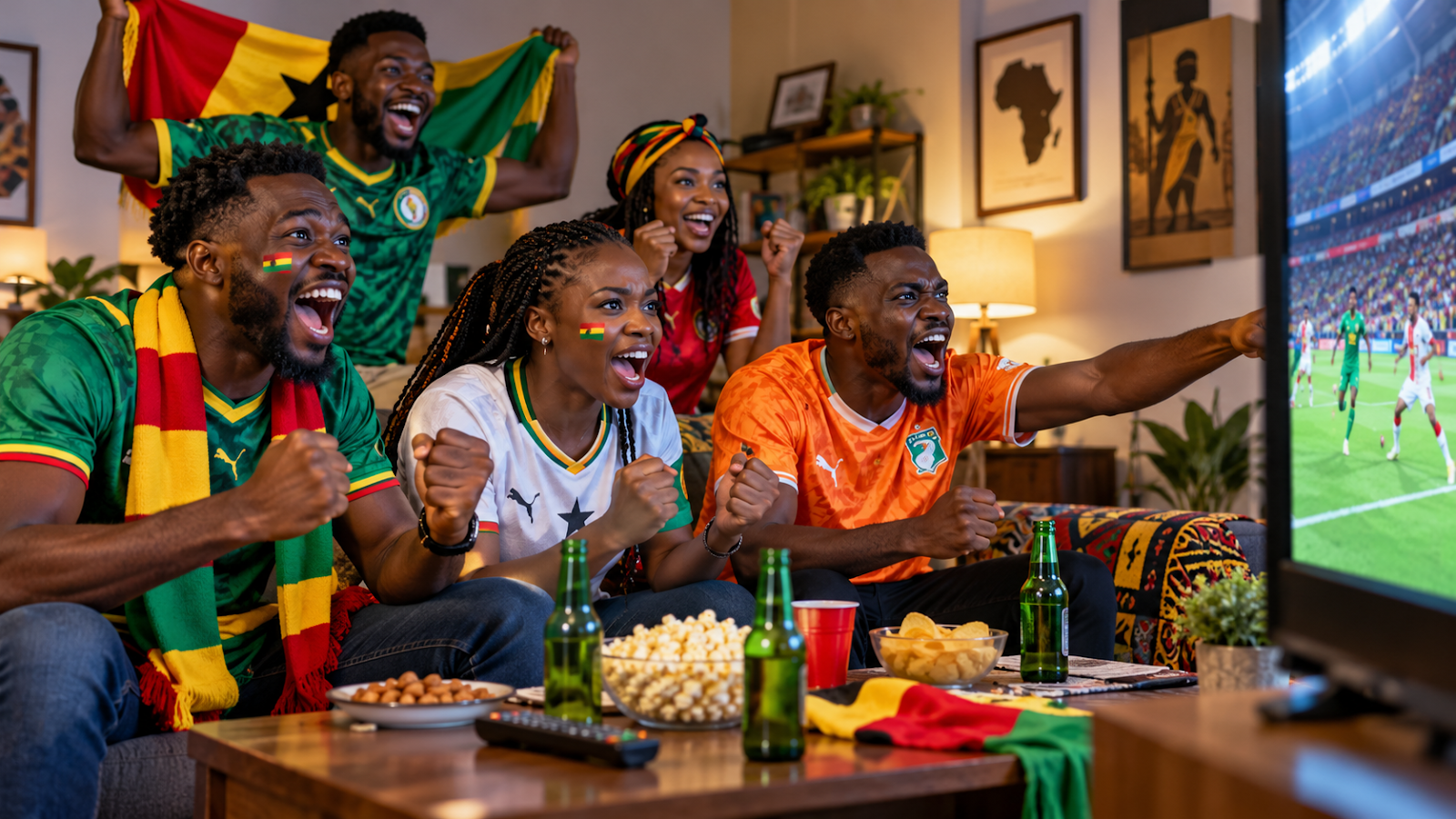
African sport is betting on free-to-air to reach its audiences, and that is the right call. But a free-to-air rights deal tells you who could watch, not who can. Senegal's pledge of decoders for the Dakar 2026 Youth Olympic Games is a small but telling admission: the last mile, from transmitter to living room, is now a rights holder's problem as much as a broadcaster's.
What happened
On 30 October, Broadcast Media Africa reported that Télédiffusion du Sénégal (TDS-SA), the national signal distributor, has pledged to make 10,000 digital terrestrial television (DTT) decoders available to the public ahead of the Games. The pledge came at a meeting convened by Communication Minister Bacary Sarr with public-service media and national companies. TDS-SA is also launching digital terrestrial radio, expected to carry 18 services. The report gave no distribution plan, eligibility rules, or estimate of how many households lack a compatible receiver.
The Games run from 30 October to 13 November, with about 507 hours of coverage, 19 media rights-holders and more than 70 sublicensees, according to the IOC. Two days earlier, CAF appointed Media Experts Limited and MBS to sell free-to-air rights to AFCON 2027 across sub-Saharan Africa, with a target of 500 million households in at least 40 countries. Canal+ holds the region's pay-TV rights, and the national broadcasters will be named in the coming months.
What it means
Reach is an engineering number before it is a marketing number. Whether a match reaches a home depends on transmitter coverage, the progress of digital migration, and whether the household owns a receiver that works. Inside World Football rightly described CAF's 500 million figure as a target, not a measured audience. A decoder pledge with no published scale of the gap is a gesture, not a fix.
The free-to-air premium depends on proof. Rights holders sell free-to-air on reach. Sponsors increasingly pay on delivered audience. If the delivered audience is not measured market by market, the value of that reach erodes at the next renewal.
Broadcasters carry the signal risk. A sublicence for a channel that much of the country cannot receive is poor value, however attractive the rights fee looks.
There is commercial inventory in access itself. Decoders, community viewing sites and free mobile streams are measurable things a telco, bank or consumer brand can fund and put its name to, with a clear outcome to report.
What we'd do
- Rights holders and agencies: make a receivability check part of every free-to-air sublicence: signal footprint, platform (analogue, DTT or free satellite), and a commitment to measure audiences per market. For AFCON 2027, the window is now, before national partners are signed.
- Broadcasters: price free-to-air sublicences against coverage you can demonstrate, and pair linear with a free stream or mobile offer to fill the gaps.
- Sponsors: write delivered-audience reporting into contracts, and treat funding access (decoders, public viewing, data-light streams) as activation with a number attached.
- Host governments: treat receiver access as event infrastructure alongside stadiums. Kenya, Tanzania and Uganda have less than eight months before AFCON kicks off on 19 June 2027.
Free-to-air is how African sport grows its audience. Counting that audience properly is how it gets paid for it.
Sources: Broadcast Media Africa, "Senegal's TDS-SA pledges 10,000 DTT decoders ahead of Dakar 2026 Youth Olympic Games", 30 October 2026; IOC, "Dakar 2026 by numbers", 28 October 2026; Inside World Football, "CAF agrees TV rights sales deal with Media Experts Ltd and MBS for AFCON 2027", 28 October 2026.