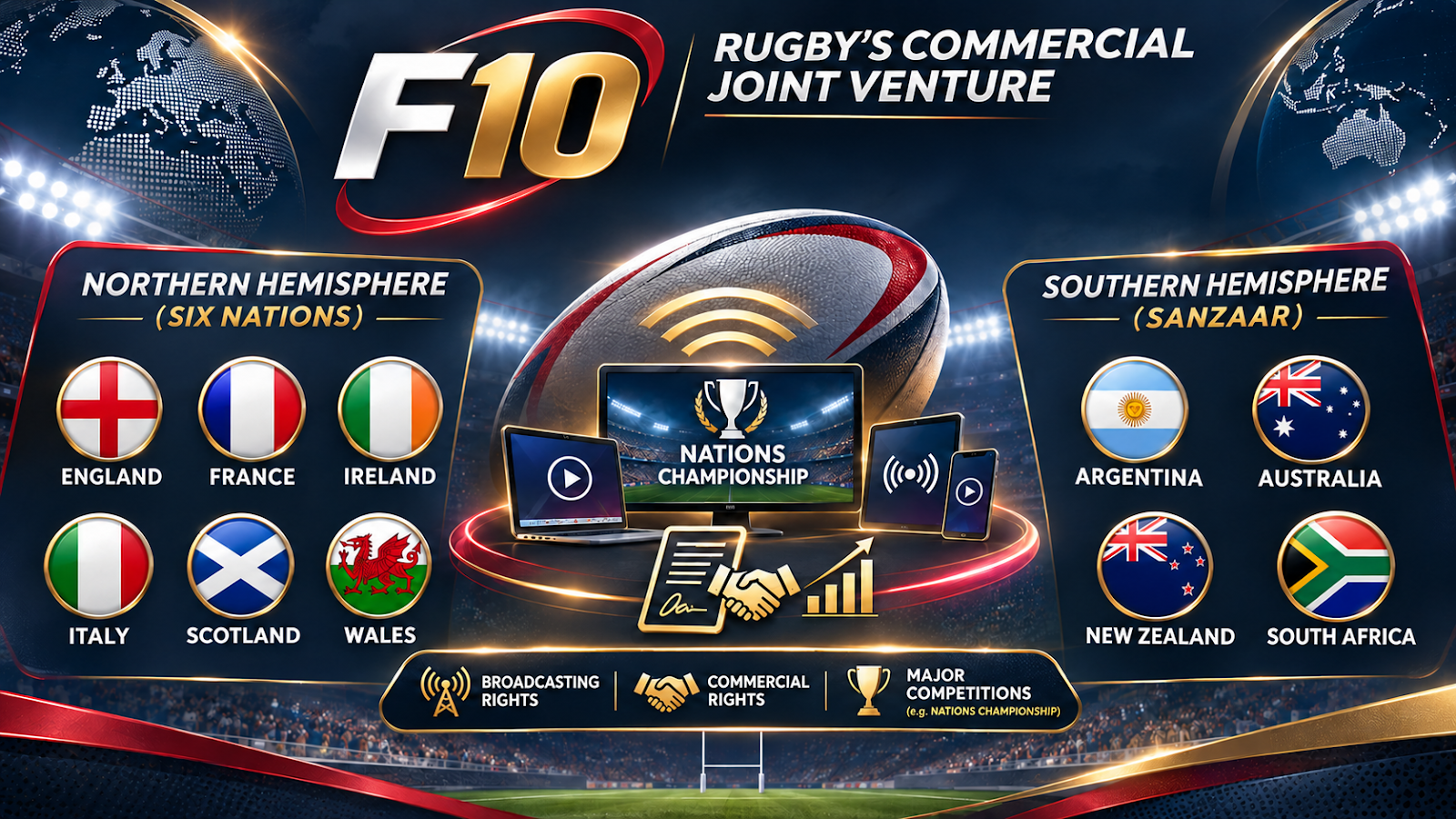
Rugby's ten leading unions are about to sell their biggest properties as one portfolio, and that changes the job for every African broadcaster and sponsor that buys international rugby. SMA's view: the 2029 rights cycle is effectively being set now, and African buyers who wait for a tender document will be negotiating on terms written for London and Paris.
What happened
The Six Nations unions and SANZAAR (South Africa, New Zealand, Australia and Argentina) have agreed to pool their media rights and sponsorship for the first time. A new rights agency, provisionally called F10, would sell the Six Nations, the Rugby Championship, the Nations Championship, British and Irish Lions tours and Rugby's Greatest Rivalry as one inventory, under a single board and one chief executive. The Telegraph reported the plan on 4 November; Broadcast Media Africa set out the African broadcast angle on 9 November.
Collective sponsorship sales are expected to start in 2028 and media rights sales in 2029, when the current separate agreements expire. Revenue will not be split equally: England and France are expected to take larger shares, while guest nations Japan and Fiji receive participation fees. Promotion and relegation will not apply to the ten. No values have been published, though RFU chief executive Bill Sweeney expects broadcast income to rise "significantly".
What it means
For broadcasters, bundling cuts both ways. SuperSport has historically bought the Rugby Championship and Lions tours as separate properties. A single seller with a single portfolio can demand a premium for the full set, and can set the territory map. If Africa is sold as one lot alongside other markets, a global streamer or a pan-regional buyer could outbid a broadcaster whose business is built on Southern African subscribers.
For South African rugby, more value but less control. The Springboks gain a seat in a group that includes the sport's richest markets. But South Africa's share is not public and is weighted towards larger markets, and decisions on how Springbok fixtures are packaged and sold will sit with a ten-union board rather than in Cape Town.
For sponsors, the top tier moves up a price band. Competition-level inventory sold globally from 2028 will be priced for multinational brands. African banks, telcos and insurers that sponsor rugby today risk being priced out of headline rights unless territorial packages exist.
For Africa's other unions, the door has closed for now. With no promotion or relegation, Namibia, Kenya, Zimbabwe and others will not reach this commercial tier through results. Their growth has to come from their own competitions and media products.
What we'd do
- Broadcasters: open talks with SANZAAR and the incoming F10 executive before the 2029 sales process is designed. Argue for a defined sub-Saharan territory, local-language commentary rights and free-to-air or digital sublicensing, so that a bid can be built around African economics.
- Sponsors: ask now whether F10 will sell territorial category rights in Africa. If it will, secure first refusal; if it will not, redirect budget to Springbok, URC franchise or domestic properties where African brands remain the natural buyer.
- SA Rugby: seek transparency on the revenue-share formula and protect the inventory it still controls, from its own digital channels to its fan and audience data.
- Emerging unions and Rugby Africa: treat F10 as the end of waiting. Package regional competitions for streaming and mobile now, with clear audience data that sponsors can buy against.
Sources: Broadcast Media Africa, 9 November 2026; The Telegraph via Yahoo Sports, 4 November 2026; SA Rugby Magazine, 5 November 2026.