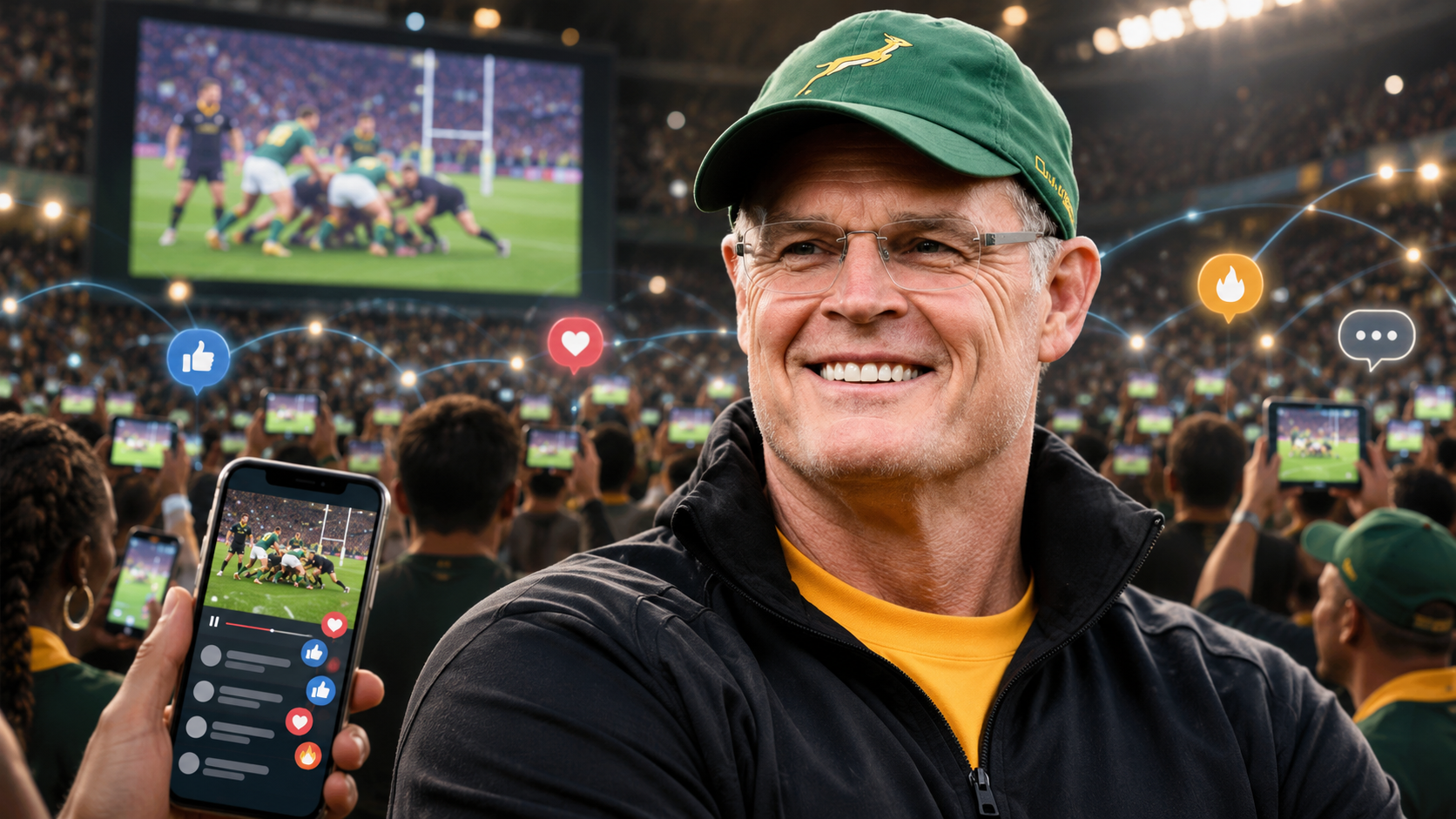
In three days, Rassie Erasmus has built a live second-screen audience of tens of thousands around a Test match he holds no rights to. Organisers and broadcasters have reached for copyright law. Our view is that the bigger issue is not whether a television picture appears on his laptop on Saturday, but that most rights contracts still have no product, and no price, for companion streams.
What happened
After South Africa's narrow defeat by France in Paris, Erasmus's comments about match officials led an independent World Rugby disciplinary panel to ban him for six matches, which keeps him away from the team and venues on matchdays. On 18 November he said he would watch Saturday's Nations Championship match against Ireland at the Aviva Stadium from his Dublin hotel, and invited adults to join him online. He called it personal, not official. The sign-up page says the match itself is not streamed: fans watch on their own TVs while he is on camera.
The Irish Times reported on 19 November that Six Nations and SANZAAR, which run the inaugural Nations Championship before a new operating company is set up next year, would consider legal action if any television footage appeared, and had assigned staff to monitor the stream. SuperSport, which holds the South African rights, is understood to be most concerned; ITV and Virgin Media hold the UK and Irish rights. World Rugby is not expected to take further action. By 20 November the watch-along had almost 88,000 sign-ups, according to African Insider, and Erasmus was asking fans to subscribe to his YouTube channel in case demand overwhelmed the stream.
What it means
- The audience is real, and it is the broadcaster's audience. SuperSport's concern makes commercial sense: most of these viewers are expected to be in South Africa, and their attention, and any brand exposure, now sits on a personal channel rather than the licensed broadcast. But a companion stream that shows no footage is not piracy, and treating it as such risks looking heavy-handed against the country's most popular coach.
- Contracts have not caught up. Most African rights deals define live, delayed and highlights rights. Few define the right to host commentary or reaction alongside a live match. Broadcast Media Africa noted this month that short-form and social rights are often left undefined in African negotiations. Where nothing is written down, nobody is paid for it.
- Talent is now a distribution channel. A coach or player with a large following can gather a live audience in days without a broadcaster. That changes the value of image rights, media obligations and personal sponsorships, for unions and clubs as much as for broadcasters.
- The timing is useful. The Nations Championship moves to a new operating company next year, which will shape the next rights cycle. This is the moment to define the category.
What we'd do
- Rights holders: add a companion-stream clause to the next tender. Define what may be shown, require registration, and license an official co-stream tier rather than leaving it to monitoring staff on the day.
- Broadcasters: bring the best co-streams inside. Offer an alternative commentary feed with the talent on your own app, behind the subscription, and share the sponsor revenue. It turns a threat into a reason to subscribe.
- Federations and clubs: put in writing what coaches, staff and players may broadcast personally during matches, including footage rules and conflicts with team sponsors.
- Sponsors: treat personality-led co-streams as inventory worth buying, but only with the rights holder's approval, so the activation does not become an ambush dispute.
Sources: The Irish Times, 19 November 2026; The Guardian, 19 November 2026; African Insider, 20 November 2026; Sky Sports, 19 November 2026; Broadcast Media Africa, 10 November 2026.